

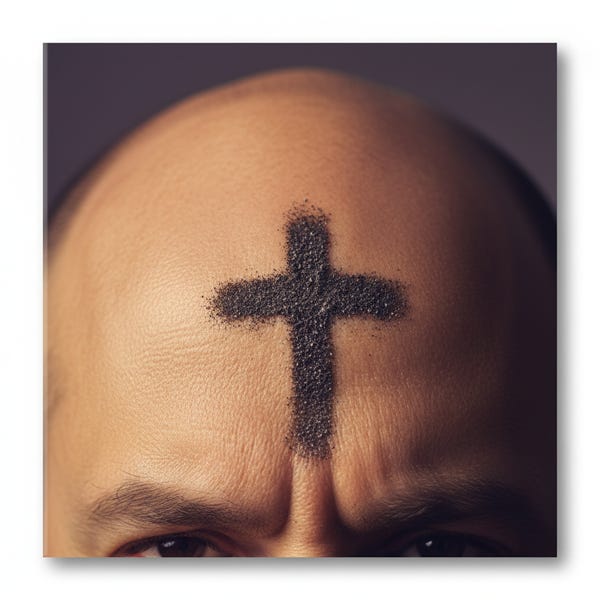
A friend messaged me a question the other day that got me thinking: “Why don’t Baptists celebrate Lent in some form?” It’s a fair question, especially as Lent becomes more visible across evangelical circles.
First, Baptists began, in part, as a protest against both the Church of England and the Roman Catholic Church because of prescribed rituals that were not explicitly required by Scripture. Lent is certainly one of those. While self-denial and fasting are clearly biblical concepts, observing them as a ritual is neither prescribed as a mandate nor described as a common practice among the earliest followers of Jesus. At some point in church history, Lent became an established practice and, in some traditions, a necessary means of demonstrating one’s piety. For the most part, Baptists—especially THIS ONE—tend to push back against mandated outward expressions of religiosity.
Second, for many people Lent has largely become a forty-day feel-good exercise. They perform an act of “devotion” for forty days and then live as they please the rest of the year. To be fair, most people who observe Lent do not treat it that way. Still, rituals like Lent can create a false sense of holiness. Holiness is found in a daily relationship with Jesus, not in a seasonal religious observance. Being outwardly “good” for a short time is no substitute for walking with the Lord every day.
Finally, fasting, prayer, and self-denial are meant to be regular components of our spiritual disciplines, not practices confined to a particular season. Lent precedes our celebration of the most important event in history—the death, burial, and resurrection of the Lord Jesus Christ—but we are called to live in the power and reality of the Resurrection every single day.
There is nothing inherently wrong with observing Lent, and there is equally nothing wrong with not observing it. However, to assess someone’s devotion or piety based on participation in a ritual not commanded in Scripture is legalism. Paul encouraged the Colossian believers not to let anyone pass judgment on them regarding festivals, new moons, or Sabbaths (Colossians 2:16–23).
So what is a healthy approach during the Lenten season?
First, on a daily basis, cast off all sin and every other weight that hinders your walk with Christ (Hebrews 12:1).
Second, practice regular self-denial (Mark 8:34). Our desires constantly compete for the devotion that belongs to Jesus.
Third, pray continually (1 Thessalonians 5:17) and let the Word of Christ dwell in you richly every day (Colossians 3:16).
Solid work Jim and right on.
Very well said! Daily relationship with Christ is the key to a victorious Christian life.